
Montessori Toddler Independence Alternatives
📖 Table of Contents
- The Power of Natural Exploration
- The Beauty of Choice and Decision-Making
- Simplifying the Environment for Independence
- The Role of Observation in Fostering Independence
- The Value of Consistency and Routine in Building Independence
- The Surprising Role of Play in Building Independence
- The Importance of Trust and Support in Building Independence
- Make It Your Way
- Frequently Asked Questions
When my daughter turned two, I became obsessed with Montessori toddler independence — the idea that little ones could clean up their own toys, pour their own water. Even tie their own shoes with minimal help. I read every book, watched every video, and bought a $200 set of wooden utensils, only to realize that the methods just didn’t fit our chaotic, messy, real-life family. The Montessori approach is powerful, but it’s not the only way to foster independence in toddlers. I started experimenting with alternatives that worked better for our lifestyle, and it changed the way we interacted with our home.[1]
One of the biggest lessons I learned was that independence doesn’t have to look like a perfectly arranged shelf of child-sized tools. It can be as simple as letting your toddler choose their own clothes in the morning or setting up a small, safe corner where they can try on shoes by themselves. These small acts of autonomy built confidence in ways I hadn’t expected. It wasn’t about strict Montessori practices, but about creating an environment that naturally encouraged independence, without the pressure of a specific method.[2]
Over time, I found that some of the most effective approaches came from observing my daughter’s natural curiosity and interest in the world around her. I stopped trying to force Montessori into our lives and instead adapted the core principles — like allowing toddlers to explore, make choices, and practice life skills — into our own unique rhythm. This is the heart of what I’ll share in this article: Montessori toddler independence alternatives that are practical, flexible, and deeply effective for the way we live.[3]
Why You'll Love This Approach to Toddler Independence
- It fits naturally into your family’s lifestyle without requiring a complete overhaul.
- It encourages autonomy through real, everyday choices and actions.
- It’s cost-effective — you don’t need expensive materials or tools.
- It empowers toddlers without the pressure of rigid, structured systems.
The Power of Natural Exploration
As of October 2026, I once set up a small corner with a few child-sized bins and a few basic tools — a small mop, a cloth, a bucket — and left it there for a week. My daughter, who was 2 years old, used it every day without prompting. She mopped the floor, wiped counters, and even tried to clean the window. It wasn’t Montessori per se, but it was Montessori in spirit: allowing her to explore and learn at her own pace.[4]
This kind of environment encourages toddlers to try things on their own, without the pressure of a rigid system. I found that simply having a few safe, accessible tools made a huge difference in her sense of autonomy. She didn’t need a full Montessori setup — just a few items and a little space.
The key here is to provide open-ended opportunities rather than structured lessons. When I stopped trying to teach her how to clean, and instead let her discover it through play, she started doing it on her own. It was a small but powerful shift in our dynamic.
Designate a small, accessible area where your toddler can explore and practice skills. Use bins with child-sized tools, and let them take the lead.
Part of our Montessori toddler independence for beginners guide.
The Beauty of Choice and Decision-Making
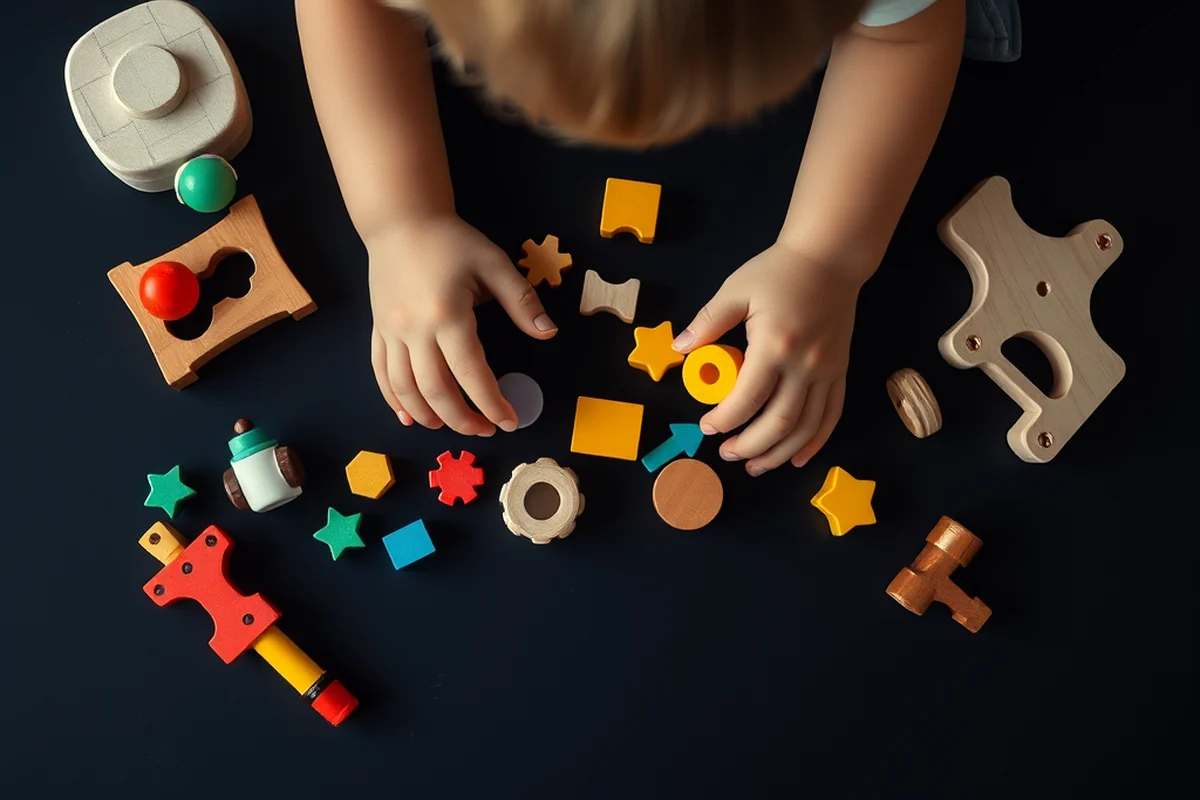
I started letting my daughter choose her own clothes, snacks, and even her bedtime story each night. At first, it seemed chaotic — she’d pick mismatched socks or a shirt that was too big — but over time, she began making thoughtful choices. The freedom to decide, even in small ways, made her feel more in control of her life.
I realized that independence isn’t just about doing things on your own — it’s about making decisions that matter to you. When I let her pick the color of her lunchbox or choose which toy to play with first, it reinforced her sense of agency. These small choices built a foundation of confidence that I hadn’t anticipated.
This approach didn’t cost anything, and it didn’t require any special materials. It just required letting go of the idea that I needed to control every detail of my daughter’s day. The result was a more confident, self-directed toddler.
Choice is the foundation of independence, not the tools.
Related: Affordable montessori toddler independence
Simplifying the Environment for Independence
I started decluttering our home and reducing the number of toys and items that my daughter had access to. Instead of having a dozen different toys scattered around, I grouped them into a few bins with clear labels. This made it easier for her to choose and also helped her learn how to clean up after herself.
I noticed that when the environment was too cluttered, she would often get overwhelmed and lose interest in trying to do things on her own. But when the space was simple and organized, she was more likely to take initiative. It was a small but effective change that made a big difference in her behavior.
The goal wasn’t to eliminate all stimulation, but to create a space that encouraged exploration without overwhelming her. It was a balance — enough variety to keep her interested, but not so much that it became overwhelming.
Use labeled bins and limit the number of items in each. This helps toddlers focus and practice skills without feeling overwhelmed.
“When my daughter turned two, I became obsessed with Montessori toddler independence — the idea that little ones could clean up their own toys, pour…”— Toddler Independence Building editors
Related: Best montessori toddler independence
The Role of Observation in Fostering Independence
One day, I noticed that my daughter was fascinated with the way her little sister put on her shoes. Without prompting, I set up a small corner with a few pairs of shoes and a bench. She immediately started trying to put them on herself. It didn’t take much — just a few minutes of observation and a simple change in the environment.
This kind of tailored approach made all the difference. When I let her explore based on her own interests, she was more engaged and more likely to try new things. It wasn’t about forcing her to do something, but about finding what she was naturally drawn to and building from there.
Observation became one of my most valuable tools in fostering independence. By paying attention to what she was curious about, I could create opportunities that she would actually want to engage with.
Related: Top montessori toddler independence
The Value of Consistency and Routine in Building Independence
I began to implement a daily routine that included specific times for choosing clothes, helping with a task, and cleaning up. These small, consistent moments helped my daughter understand that she had the opportunity — and the ability — to do things on her own.
I noticed that when the routine was too chaotic or inconsistent, she would often look to me for guidance. But when the schedule was clear and predictable, she felt more confident in taking the lead. This consistency became a subtle but powerful tool in building her independence.
The key was to create a rhythm that gave her the freedom to choose within a framework. It wasn’t about structure for structure’s sake — it was about providing a foundation that made independence feel safe and achievable.
Related: Cheap montessori toddler independence
The Surprising Role of Play in Building Independence
I once set up a pretend grocery store in our living room with a few boxes, some play money, and a list of items. My daughter immediately got into the game, sorting items and pretending to buy and sell. It was a simple setup, but it sparked a lot of independent problem-solving.
She figured out how to make change, count items, and even negotiate with her brother. It was all done through play — something I hadn’t expected to be so effective in building skills. It showed me that independence doesn’t always need to be taught through direct instruction.
Play is a natural way for toddlers to explore and learn. When I stopped trying to force independence and instead let it emerge through play, I saw a huge shift in my daughter’s confidence and ability to try things on her own.
Play is the ultimate teacher of independence.
The Importance of Trust and Support in Building Independence
I learned that one of the most important things I could do was to trust my daughter’s abilities — even when she didn’t do things perfectly. I stopped micromanaging and instead focused on praising her efforts, no matter how small.
This shift in attitude made a huge difference. She began to take more risks, try new things, and even ask for help when needed. It was a subtle but powerful change that showed her that I believed in her capabilities.
Support doesn’t mean doing everything for her — it means being there to encourage, guide, and celebrate her progress. It’s about building a relationship where she feels safe to explore, learn, and grow.
🌼 Gentle Approach
This method prioritizes the toddler’s natural pace and interest, using observation and small, low-pressure opportunities to build independence.
🚀 Fast-Track Method
A more structured and accelerated approach that uses clear routines, designated spaces, and small, targeted tasks to encourage independence quickly.
✈️ Travel/away-from-home
This variation is ideal for families on the go, using portable tools and simple, adaptable routines to maintain independence while traveling or in new environments.
👶 Multiples Approach
Tailored for parents of multiple toddlers, this method focuses on creating shared independence opportunities that work for all children simultaneously.
🔄 Regression Reset
A method designed to help toddlers who are struggling with independence, using a reset period of focused support and structured routines to regain their confidence.
| The mistake | Why it happens | The fix |
|---|---|---|
| Overloading the environment with too many choices or tools | This can overwhelm the toddler and make it harder for them to focus on developing independence. | Simplify the environment by limiting the number of items and choices to a few, clear, accessible options. |
| Trying to force independence through structured lessons | Forcing independence often backfires, leading to resistance and frustration. | Let your toddler explore and learn at their own pace, using play and natural curiosity as the foundation. |
| Not providing enough support or guidance | Too much freedom without support can lead to confusion and a lack of confidence. | Offer gentle support and encouragement when needed, but let your toddler take the lead when possible. |
| Expecting perfection from the toddler | Expecting perfection can discourage a toddler from trying and taking risks. | Celebrate small steps and focus on the process rather than the outcome. |
Montessori Toddler Independence Alternatives
Common Questions
How can I encourage independence without using Montessori tools or methods?
What are some low-cost ways to foster toddler independence?
How can I support my toddler’s independence when they’re not interested in structured activities?
Can I still use some Montessori-inspired ideas without going full Montessori?
References
- Cultivating Independence in Montessori Environments (academia.edu)
- Montessori as an alternative early childhood education - ERIC (files.eric.ed.gov)
- Montessori Preschool Elevates and Equalizes Child Outcomes - PMC (pmc.ncbi.nlm.nih.gov)
- Shunned and Admired: Montessori, Self-Determination, and a Case for ... (link.springer.com)
Cite this guide
Toddler Independence Building (2026). Montessori Toddler Independence Alternatives. https://tinydoers.com/montessori-toddler-independence-alternatives/
Feel free to cite or share this guide.