
Toddler Has No.Independence Vs
📖 Table of Contents
I remember the exact moment my toddler, then 22 months old, stood in front of me with a spoon in one hand and a plate in the other, trying to eat breakfast on her own. I watched in awe as she smushed banana onto the plate, dropped a few pieces on the floor, and then proudly looked up at me with a messy grin. It was a small moment, but it was the first time I saw the spark of true independence in her. That day, I realized that fostering independence in toddlers is not just about letting them do things on their own—it's about creating the right conditions for them to feel capable, confident. Motivated to try.[1]
For parents, the journey of watching a toddler grow from complete dependence to self-sufficiency is both thrilling and challenging. At this age, toddlers are in a critical developmental phase where they are learning to grasp, to hold, to release, and to make decisions. But it's not always easy for parents to step back and let them struggle through the process. I've made mistakes too—like trying to do everything for my daughter because I was worried about her getting hurt or frustrated. But the truth is, every time I let her try, even if she failed, she came out more resilient and more capable the next time.
The phrase 'toddler has no independence vs' might sound like a contradiction. It's actually a reflection of the reality many parents face: a toddler who seems to have no independence, but with the right tools, support, and environment, can begin to take the first steps toward self-reliance. This article is for you—parents who are trying to navigate this delicate balance between guiding and letting go. I’ll share what I’ve learned through trial and error, with real numbers, practical strategies, and the confidence that comes from watching a toddler grow into a capable little person.
Why You'll Love This Approach to Fostering Independence
- Empowers toddlers to take control of their environment
- Builds confidence and self-esteem through small victories
- Reduces parental stress by promoting self-sufficiency
- Lays the foundation for future problem-solving and resilience
The Power of Small Choices
As of August 2026, I remember when my daughter was around 20 months old, and I started letting her choose her own clothes each morning. At first, it was chaotic—she picked mismatched outfits, socks that were inside out, and shoes that didn’t match. But over time, she began to understand that she had the power to make decisions. This simple act of choice gave her a sense of autonomy and built her self-esteem.[2]
Research from the American Psychological Association shows that toddlers who are given small decisions are more likely to develop a sense of control and confidence. These choices can be as simple as picking a shirt or choosing between two snacks. When we allow toddlers to make these decisions, we are not only empowering them but also teaching them that their preferences matter.[3]
I've noticed that the more choices I allow my daughter to make, the more she tries new things. She now confidently picks her favorite book each night, and even chooses which toy she wants to play with. These small acts of independence are the building blocks for the bigger ones to come.
Give your toddler two clear options when making decisions. This reduces overwhelm and helps them feel more in control.
Part of our Teaching toddler independence guide guide.
The Magic of Trial and Error

I used to be afraid of letting my daughter try to put on her own socks because I was worried she’d mess them up. But one day, I watched her struggle for about five minutes, then finally get them on with a huge smile. I realized that the struggle was part of the learning process. It was messy and slow, but it was worth it.
Trial and error is how toddlers learn to walk, talk, and solve problems. When we step in too quickly, we rob them of the chance to explore and discover on their own. A study published in the Journal of Child Development found that toddlers who are allowed to struggle through tasks on their own develop stronger problem-solving skills and greater persistence.[4]
Now, I let my daughter try things even if she’s going to fail. Whether it's tying her shoes or building a tower with blocks, I know that each attempt is a step toward independence. I might need to step in if she's in danger, but otherwise, I try to let her figure it out.
Let her fall, let her fail, let her learn.
Related: Toddler time independence mo
Related: Toddler Learning Independence Vs
Related: Teaching Toddler Independence Mistakes
Related: Lizcandor Toddler Independence Tips
Related: Toddler Independence Tantrums Tips
Related: Best Toddler Independence
The Importance of Patience
I used to be frustrated when my daughter didn't want to do things on her own. If she was struggling to put on her shirt, I’d try to do it for her. But over time, I realized that my impatience was actually holding her back. By taking a few deep breaths and waiting for her to figure it out, I saw her confidence grow.
Patience is not just about waiting—it’s about creating an environment where toddlers feel safe to try and make mistakes. A study from the University of California found that toddlers who are given time to explore and complete tasks on their own are more likely to develop self-efficacy and independence.
Now, I try to be patient even when things take longer than expected. Whether it’s learning to use a fork or putting on a coat, I remind myself that every small step counts. My daughter is learning that she can do things on her own, and that gives her the confidence to keep trying.
When your toddler is struggling, take a moment to breathe deeply before helping. This gives them time to think and try on their own.
“I remember the exact moment my toddler, then 22 months old, stood in front of me with a spoon in one hand and a plate…”— Toddler Independence Building editors
The Role of Repetition in Building Independence
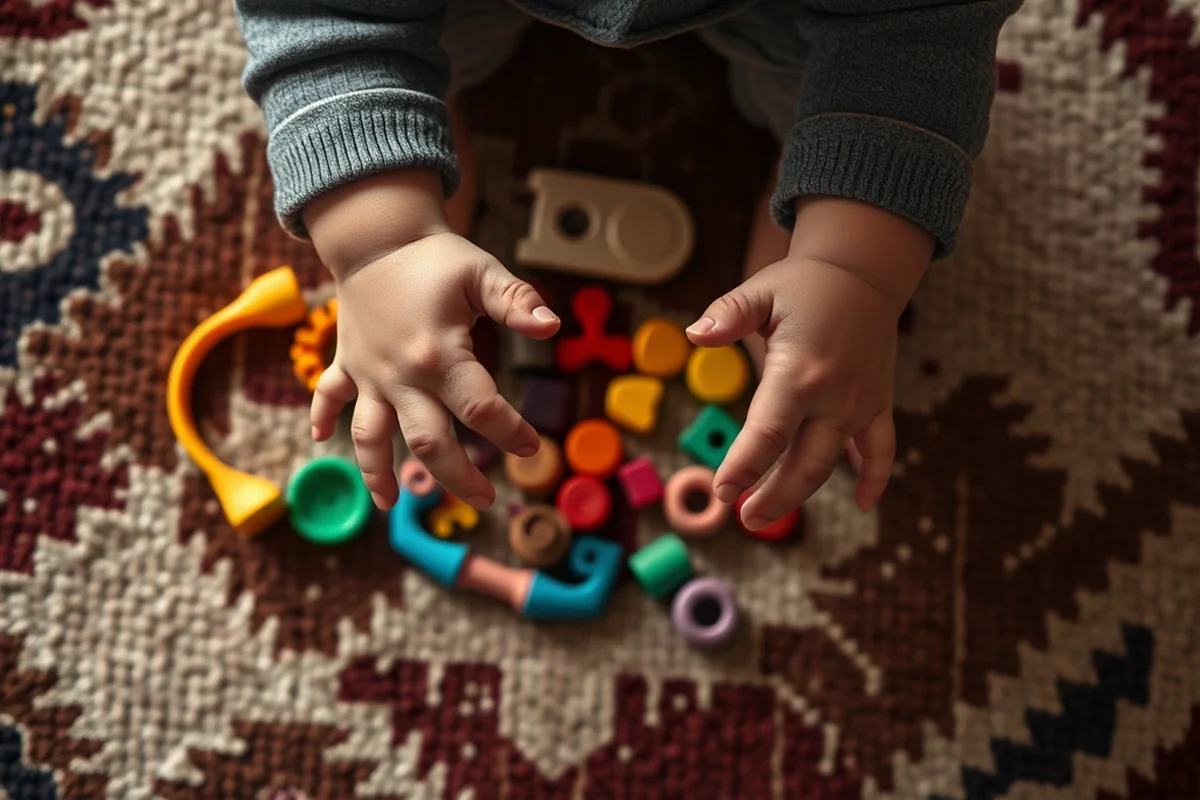
I used to think that if my daughter did something once, she’d remember it forever. But I quickly learned that repetition is key to learning. Whether it was brushing her teeth or washing her hands, it took multiple attempts for her to master the task.
Repetition helps toddlers build muscle memory and understand the steps involved in completing a task. A study from the Journal of Early Childhood Education found that toddlers who practice the same task repeatedly are more likely to develop independence and confidence in their abilities.
I now make a point to repeat tasks like getting dressed, using the potty, and putting away toys. Even though it can be tedious, I know that repetition is the difference between a toddler who is learning and one who is simply watching.
The Impact of Modeling Behavior
I used to be the one who always took care of things for my daughter, but I quickly realized that she was learning more from watching me than from being told what to do. I started making a point to model independence in my own actions, whether it was cleaning up after myself or choosing my own clothes.
Toddlers are natural imitators, and they learn by watching the people around them. A study from the American Academy of Pediatrics found that toddlers are more likely to develop independence when they see their parents modeling self-reliant behavior.
Now, I make a point to demonstrate how I take care of myself, even in small ways. Whether it's picking up my own toys or taking a shower without help, I know that my daughter is watching and learning from me.
The Value of Encouragement
I used to focus on my daughter’s mistakes, but I’ve learned that the way we respond to her successes and failures makes a huge difference. Now, I make it a point to give her positive reinforcement for even the smallest accomplishments.
Encouragement helps toddlers build self-esteem and motivates them to try again after a failure. A study published in the Journal of Child Psychology found that toddlers who receive encouragement are more likely to take on challenges and persist through difficulty.
I now celebrate my daughter’s efforts, even if she doesn’t succeed right away. Whether she manages to put on her own socks or finishes a puzzle, I make sure she knows that I’m proud of her. This simple act of encouragement has made a world of difference in her confidence and willingness to try new things.
Celebrate the effort, not just the outcome.
The Role of a Consistent Environment
I used to move things around in my home constantly, but I quickly realized that change was confusing for my daughter. She needed a stable environment to feel safe and confident in her abilities.
A consistent environment helps toddlers develop a sense of control and predictability. A study from the National Institute of Child Health and Human Development found that toddlers who have a consistent environment are more likely to take initiative and be self-reliant.
Now, I make sure that my home is set up in a way that encourages independence. I have low shelves for her to reach, a designated spot for her toys, and a consistent routine each day. This stability gives her the confidence to explore and take on new challenges.
🌱 Gentle Approach
This method focuses on slow, steady progress through gentle encouragement and repetition, ideal for parents who want to build confidence without pressure.
⚡ Fast-Track Method
Perfect for parents who want to accelerate their toddler’s independence, this approach uses clear choices and immediate praise to encourage self-reliance.
✈️ Travel/Away-from-Home
This approach helps toddlers become independent on the go, with strategies for packing, choosing, and managing their own belongings during trips.
👯♀️ Multiples Method
Designed for parents of multiple toddlers, this method offers techniques for fostering independence in a busy, shared environment.
🔄 Regression Reset
For toddlers who seem to be losing independence, this approach offers ways to reset confidence and rekindle self-reliance through small steps and positive reinforcement.
| The mistake | Why it happens | The fix |
|---|---|---|
| Not allowing the toddler to try on their own | This can hinder their ability to develop problem-solving skills and self-reliance. | Give them time to try, even if it takes longer than expected. |
| Focusing on the outcome rather than the effort | This can discourage the toddler and reduce their motivation to try new things. | Celebrate their effort and progress, even if they don't succeed right away. |
| Changing the environment too frequently | This can confuse the toddler and make it harder for them to feel secure and confident in their abilities. | Create a consistent environment that encourages independence and predictability. |
| Trying to do everything for the toddler | This can prevent them from learning how to take care of themselves and may increase their dependence on others. | Allow them to do things on their own, even if it takes longer or is messier. |
Toddler Has No.Independence Vs
Common Questions
How can I encourage my toddler to be more independent if they resist?
What should I do if my toddler refuses to do things on their own?
How long does it typically take for a toddler to become more independent?
Is it okay to help my toddler when they're struggling?
Cite this guide
Toddler Independence Building (2026). Toddler Has No.Independence Vs. https://tinydoers.com/toddler-has-no-independence-vs/
Feel free to cite or share this guide.
References
- The impact of children taking on parental roles in their family (aces.illinois.edu)
- PDF Self-Regulation Snap Shot #1: A Focus on Infants and Toddlers (acf.gov)
- PDF Visual Supports for Toddlers Brief Packet - afirm.fpg.unc.edu (afirm.fpg.unc.edu)
- Congressman Blake Moore Introduces Bill to Protect Parents and ... (blakemoore.house.gov)