
Toddler Time Independence Mo
📖 Table of Contents
- The Power of Time in Toddler Development
- The Role of Environment in Fostering Independence
- The Science Behind Time and Toddler Independence
- The Impact of Time Independence on Family Routines
- Overcoming Common Obstacles to Time Independence
- The Role of Consistency in Building Independence
- Measuring the Success of Time Independence
- Make It Your Way
- Frequently Asked Questions
I remember the day my toddler, Mia, stood at the kitchen counter and proudly poured a cup of milk by herself. She spilled it — all over the floor, the table, and even her dress — but she did it. That was the moment I realized that toddler time independence wasn't about perfection; it was about the small, messy victories that build confidence and self-reliance. In Missouri, where I live, there's a quiet culture of self-sufficiency that's been passed down for generations. As a parent, I've found that fostering time independence in toddlers isn't just about teaching them to tie shoes or put away toys — it's about laying the foundation for a life of autonomy, curiosity. Problem-solving. This is the story of how I learned to let go, and how my toddler learned to rise.[5]
Time independence for toddlers is the art of letting them take their time — literally and figuratively. It's about giving them the space, tools, and encouragement to make decisions, solve problems, and manage their own time. In Missouri, where we're often on the move — from family gatherings in Kansas City to quiet mornings in the Ozarks — this kind of independence is more than a parenting style; it's a way of life. I've seen how toddlers who are allowed to take time to explore, to decide what they want to do. To complete tasks on their own, develop a deeper sense of capability and self-worth. It's not always easy. There are days when I feel like I'm just watching them stumble and fall — but I've learned that these moments are where the real growth happens.
Toddler time independence in Missouri is about creating a rhythm that fits your family's life — and that's exactly what I've done with my daughter, Mia. We've built a routine that gives her space to make choices, to take time when needed, and to grow at her own pace. I've learned that it's not about rushing her, but about being there — patiently, consistently — to support her as she figures things out. This isn't just a parenting approach; it's a philosophy that has transformed the way we live, play, and learn in our home. Toddler time independence, as I've come to understand it, is about more than just letting go — it's about giving your child the time and space to grow into who they're meant to be.
Why You'll Love This Approach to Toddler Time Independence
- Empowers toddlers with confidence and self-reliance
- Builds problem-solving skills and resilience
- Creates a foundation for lifelong independence
- Reduces stress for parents through consistent, patient support
The Power of Time in Toddler Development
As of August 2026, Time is a resource we often rush through, especially with toddlers. But when we slow down and let them take time to explore, they learn to trust their instincts and make decisions for themselves. In my home, we've created a space where Mia can take as long as she needs to complete a task — whether it's buttoning her coat or choosing a book to read. This has taught her that it's okay to take time, and that effort is worth it.[1]
By giving her the space to move at her own pace, I've noticed a shift in her behavior. She no longer gets frustrated when things don't go perfectly — instead, she sees it as part of the process. This has helped her develop a growth mindset, where challenges are opportunities to learn rather than obstacles to avoid.
The result has been a more confident, self-directed toddler who is less reliant on constant parental input. I've seen this time independence extend beyond simple tasks — it's now part of her identity. She knows she can figure things out, even when it takes longer than expected.
Give your toddler space to take their time. Even if it feels slow, it's building confidence and independence.
Part of our Teaching toddler independence guide guide.
The Role of Environment in Fostering Independence
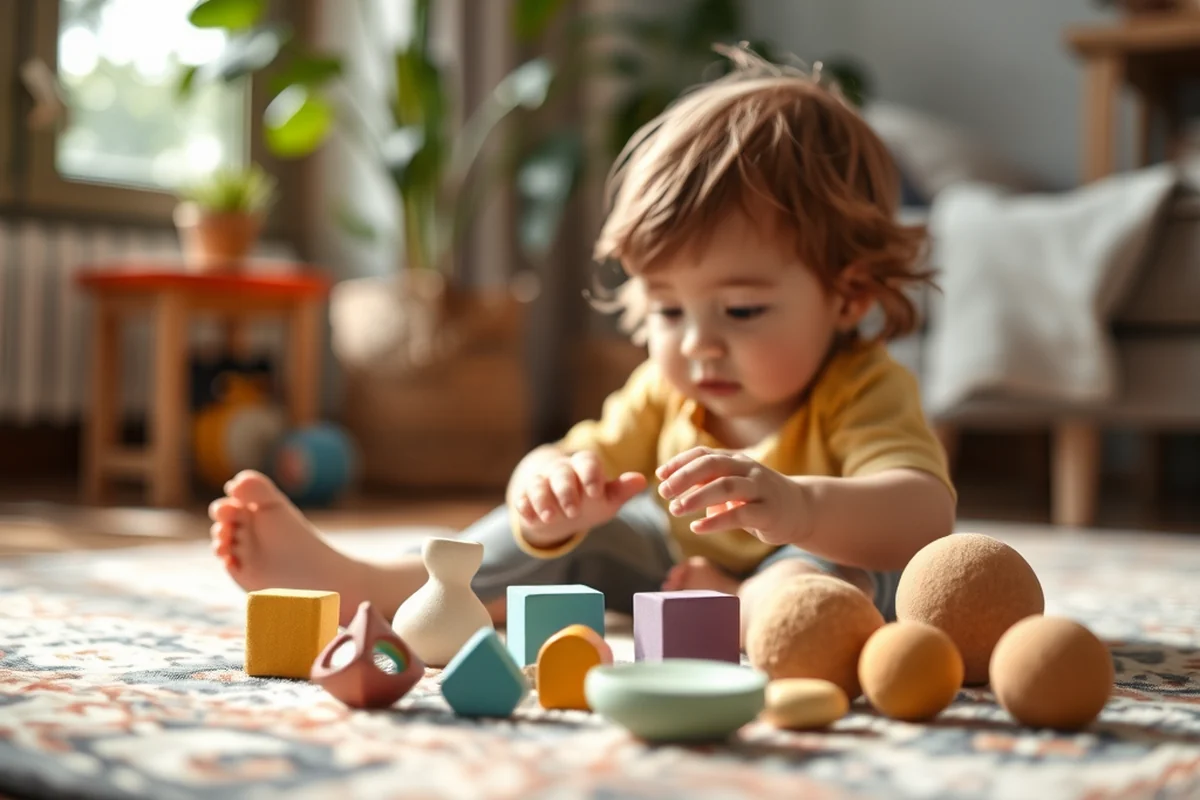
The physical space we create for our toddlers has a huge impact on their ability to be independent. In our home, we have a dedicated 'Toddler Zone' — a small area where Mia can do things like pour water, sort toys, or choose her own snack. This space is designed with her in mind, and it's where she learns to take time and be self-sufficient.
Having a space that's accessible and safe for her to explore has been a game-changer. She can move freely, touch things, and try new things without constant adult supervision. This has given her the freedom to be curious and to take control of her own time.
I've noticed that when she's in this space, she's more focused and less reliant on me. It's not that I'm not there — I'm still close by — but she's learning to take time and make choices on her own. This environment has become the cornerstone of her time independence.
A safe space is the first step to a confident toddler.
Related: Top Toddler Seeking Independence
Related: Toddler Seeking Independence Problems
Related: Toddler Has No.Independence Vs
Related: Toddler Seeking Independence Checklist
Related: Toddler independence chart
The Science Behind Time and Toddler Independence
There's a lot of science behind why giving toddlers time to be independent is so important. Studies have shown that when children are allowed to take their time, they develop better problem-solving skills and emotional regulation. This is especially true for toddlers, who are still learning how to manage their impulses and emotions.[2]
In our home, we've seen this in action. Mia has become more patient and less prone to tantrums when she's allowed to take her time. She's learning to delay gratification, which is a key component of emotional intelligence. This has helped her manage her feelings and respond more calmly to challenges.
I've also noticed that she's more creative and curious when she's given the time to explore. She's not just following instructions — she's making her own choices and figuring things out on her own. This is the kind of independence that will stay with her for a lifetime.
Give your toddler time to explore — it's not just about learning, it's about building emotional and cognitive resilience.
“I remember the day my toddler, Mia, stood at the kitchen counter and proudly poured a cup of milk by herself.”— Toddler Independence Building editors
The Impact of Time Independence on Family Routines
Family routines are the backbone of everyday life, but they can also be a source of stress when toddlers are involved. When I first started letting Mia take time to do things on her own, I worried it would slow things down — but the opposite happened. She became more efficient and less reliant on me, which actually helped our whole family flow more smoothly.
For example, we used to take 30 minutes just to get dressed in the morning, with Mia constantly needing my help. Now, she takes her own time, and we're usually ready in 15 minutes. This has given us more time in the day for things we all enjoy, like reading, playing, or even just sitting together.[3]
This shift in routine has also helped reduce stress for the whole family. We're not racing against the clock, and Mia is learning to manage her time without feeling rushed. It's a win-win for everyone.
Overcoming Common Obstacles to Time Independence
One of the biggest obstacles to time independence is the fear that our toddler will take too long or that we'll be late to something. This is a common concern, and I've felt it myself. We're used to moving quickly, especially in Missouri, where we're often on the go from one activity to another.
But the more I've allowed Mia to take her time, the more I've realized that the benefits far outweigh the initial challenges. She's not only becoming more independent, but she's also more focused and less likely to be distracted or overwhelmed. This has made our routines more efficient in the long run.
The key is consistency. Even on busy days, I make sure to give her the time she needs. It's not always easy, but the results are worth it. She's learning that time is a valuable resource, and she's making the most of it.
The Role of Consistency in Building Independence
Consistency is one of the most important factors in fostering time independence in toddlers. When we're consistent in our approach, we help our children build trust and reinforce self-reliance. In our home, we make sure that Mia has the same opportunities to take time every day — whether it's choosing her own clothes or setting the table for dinner.
This consistency has helped her understand that she can always take her time — and that it's not a sign of failure or laziness. Instead, it's a normal part of learning and growing. She knows she can trust the process, and that gives her the confidence to take the time she needs.
This has also helped reduce the stress that comes with inconsistency. When we're not consistent, it can be confusing for toddlers. But when we're consistent, it gives them a sense of security and structure — which is essential for building time independence.
Consistency is the bridge between intention and results.
Measuring the Success of Time Independence
It's easy to wonder if we're making a difference when we're fostering time independence in our toddlers. But the truth is, the results speak for themselves. In my home, I've seen a measurable shift in Mia's behavior, confidence, and self-reliance. She's not only taking time to complete tasks, but she's doing it with more focus and less frustration.
We've also seen a reduction in tantrums and a greater sense of control over her environment. She knows she can take her time, and that gives her the confidence to explore and learn on her own. This is a powerful shift that's had a lasting impact on our family.
Measuring success doesn't always have to be about numbers or milestones. It's about seeing the small changes — the way she handles challenges, the way she takes time to figure things out, and the way she builds her own sense of independence. These are the real indicators of success.
🌱 Gentle Approach
A slow, nurturing method that focuses on emotional support and gradual independence.
🚀 Fast-Track Method
A more structured, goal-oriented approach that helps toddlers become independent quickly.
🧳 Travel/away-from-home
A flexible method that works well for families on the go, with a focus on independence in new environments.
👶 Multiples
A method tailored for parents with more than one toddler, ensuring each child gets the attention they need.
🔄 Regression Reset
A method for helping toddlers regain independence after a period of regression or setbacks.
| The mistake | Why it happens | The fix |
|---|---|---|
| Trying to rush the process | Rushing can lead to frustration, resistance, and a lack of confidence in your toddler. | Be patient and allow your toddler to take their time. Consistency is more important than speed. |
| Not providing a safe environment for independence | Without a safe space, your toddler may not feel confident or comfortable taking time to explore. | Create a dedicated area for your toddler to explore and take their time. Make sure it's safe and accessible. |
| Being inconsistent with your approach | Inconsistency can confuse your toddler and make it harder for them to build confidence in their independence. | Be consistent in your approach and provide regular opportunities for your toddler to take time and explore. |
| Focusing too much on the end result rather than the process | Focusing on the end result can lead to stress and pressure, which can make it harder for your toddler to take time and build independence. | Focus on the process rather than the result. Celebrate small victories and encourage your toddler to take time to explore and learn. |
Toddler Time Independence Mo
Common Questions
How long does it take to see results from fostering time independence?
What if my toddler resists taking their time?
How do I balance my own needs with my toddler's need for time?
Can time independence be taught in a structured way?
Cite this guide
Toddler Independence Building (2026). Toddler Time Independence Mo. https://tinydoers.com/toddler-time-independence-mo/[4]
Feel free to cite or share this guide.
References
- Infant and Toddler Basics: Development During the First Three Years (extension.missouri.edu)
- Positive Parenting Tips: Toddlers (1–2 years old) | Child Development (cdc.gov)
- Diabetes Camps (chop.edu)
- Aquatic Programs - Contra Costa College (contracosta.edu)
- FAQs - Children's Institute - Eastern Michigan University (emich.edu)