
Why Toddler Independence Chart
📖 Table of Contents
- What is the Toddler Independence Chart and How Does It Work?
- How to Choose the Right Chart for Your Toddler
- The Psychological Benefits of the Chart
- How the Chart Shapes Daily Routines
- Tailoring the Chart to Your Child’s Needs
- How to Keep the Chart Motivating Over Time
- The Long-Term Impact of the Chart
- Make It Your Way
- Frequently Asked Questions
I remember the day my daughter, then 2 years old, reached for the snack drawer on her own — no prompting, no help — and pulled out a cracker. It was a small moment, but it lit something inside me. I had been using a toddler independence chart for weeks, and I could see the shift: she was learning to take initiative, to solve problems, and to trust herself. That chart wasn’t just a tool; it was a mirror to her growing confidence and a guidepost for me as a parent.[3]
The toddler independence chart is one of those simple tools that feel like they’re doing nothing, but actually, they’re doing everything. I’ve watched as it turned moments of frustration into victories for my child — and for me, it became a way to measure progress, to celebrate small steps. To give her a sense of ownership over her daily choices. It was during those quiet hours of charting that I realized just how much a child’s self-reliance can be nurtured through structure, consistency, and a little bit of visual storytelling.[4]
What I didn’t know before I started using the chart was how much it would change the rhythm of our days. It wasn’t just about tasks — it was about creating a space where my daughter could feel seen, heard, and capable. The chart taught me that independence isn’t something a child just 'gets' — it’s something we build, one sticker at a time. And that’s why, when I think about why toddler independence chart is so valuable, I see it not just as a tool, but as a foundation for a child’s future.[5]
Why You'll Love This Toddler Independence Chart
- Tracks progress in a way that’s visible and satisfying for your child
- Encourages autonomy and self-esteem through achievement markers
- Provides a consistent, positive framework for daily routines
- Allows you to tailor the chart to your child's unique strengths and needs
What is the Toddler Independence Chart and How Does It Work?
As of August 2026, the chart is usually a board or a piece of paper with pictures or words that represent tasks a toddler can do, like brushing teeth, putting on shoes, or picking up toys. Each time my daughter completed a task, I would put a sticker on the chart. It was amazing to see how excited she got when she saw the sticker go up — it made her feel accomplished and proud.[1]
At first, I wasn’t sure if she would understand the concept. Within a few days, she started to point to the chart and say, 'I did it!' That was the moment I realized how powerful a visual tool could be. It wasn’t just about the task — it was about the recognition of effort and the celebration of success.
I also found that the chart helped me create a routine that was both structured and flexible. It didn’t take over our days, but it gave my daughter a sense of direction, and it made me feel like I was supporting her in a meaningful way.
Pick 2-3 simple tasks that your child can do on their own, like brushing teeth or putting a toy in the basket. This helps avoid overwhelm and keeps them motivated.
Part of our Why toddler wanting independence guide.
How to Choose the Right Chart for Your Toddler

When I first started, I bought a generic chart that had pictures of all kinds of tasks. But I quickly realized that my daughter didn’t connect with it. She was more interested in things like 'helping in the kitchen' or 'brushing her hair.' So I made a new one with those specific tasks. It made a huge difference — she was more engaged and more motivated to complete them.
I also made sure the chart was at eye level for her. When I hung it on the fridge, she could see it every day, and it became part of our routine. The act of looking at the chart every morning became a kind of ritual that made her feel more in control of her day.
Another thing I noticed was that when the chart had colors and stickers that matched her favorite themes — like stars, animals, or superheroes — she was more excited to use it. It wasn’t just about the task — it was about the way it made her feel.
The right chart turns a task into a celebration.
Related: Top Toddler Seeking Independence
Related: Toddler Independence Chart
Related: Toddler Seeking Independence Problems
Related: Why lizcandor toddler independence
Related: Why Toddler Asserting Independence
Related: Types Of Toddler Independence Chart
Related: Toddler Independence Chart Alternatives
Related: Cheap Toddler Independence Chart
The Psychological Benefits of the Chart
I had always thought of independence as something that would come naturally with age, but the chart taught me that it's something we can nurture. Every time my daughter completed a task, she felt a sense of pride that I hadn’t seen before. It was as if the chart was giving her a little boost of confidence every day.
I noticed that the chart also helped her feel more in control of her environment. When she could see that she had completed a task, she felt like she had contributed to her day in a meaningful way. It made her less reliant on me for help and more willing to try things on her own.
The chart also helped me become a more involved parent. I found myself paying closer attention to her progress and celebrating even the smallest victories. It was a way for me to support her growth without being overbearing.
When you talk to your child about the chart, use positive language like 'You did it!' or 'You're so proud of yourself!' This reinforces the sense of accomplishment they feel.
“I remember the day my daughter, then 2 years old, reached for the snack drawer on her own — no prompting, no help — and…”— Toddler Independence Building editors
How the Chart Shapes Daily Routines
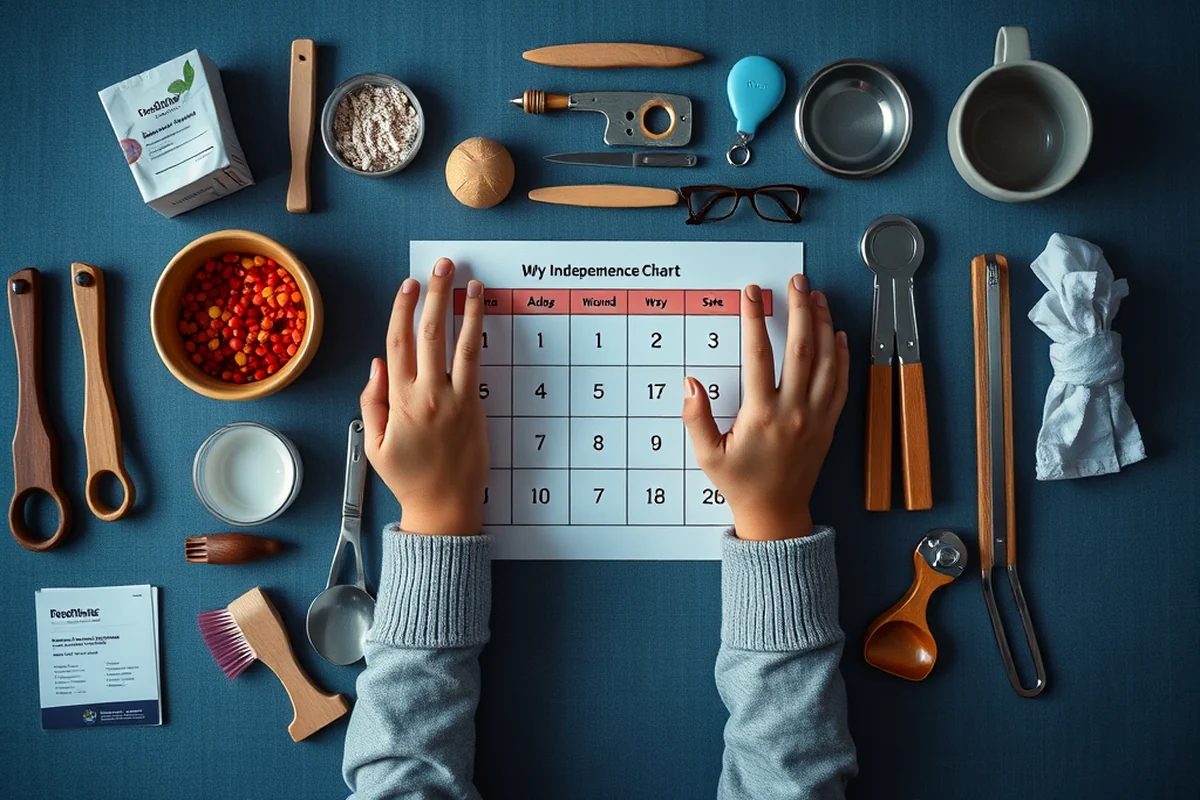
I found that the chart helped our days feel more predictable. My daughter would wake up, look at the chart, and know what she needed to do that day. It was a way to make the morning flow more smoothly, and it gave her something to look forward to.
At first, I was worried that the chart would make our days feel too structured. But over time, I realized that it actually gave her a sense of freedom. She felt like she had a choice in what she could do, and that made her more willing to try new things.
I also noticed that the chart helped us create a more peaceful home environment. When my daughter was able to complete her tasks on her own, it reduced the number of interruptions and arguments during the day. It was a small change, but it made a big difference in the overall mood of our household.
Tailoring the Chart to Your Child’s Needs
I learned that the key to making the chart work was to be flexible. My daughter had some days where she was more motivated than others, and I found that I had to adjust the tasks accordingly. Sometimes I would add a new task or remove one that was too difficult for her.
I also noticed that her mood played a big role in how she responded to the chart. On days when she was tired or frustrated, she would resist completing tasks, even if they were simple. So I found that I had to be patient and sometimes even skip the chart on those days if it was going to cause more stress.
The chart became a tool for understanding my daughter better. It helped me see what she was capable of and what she needed more help with. It was a way to support her growth without being too rigid or too lenient.
How to Keep the Chart Motivating Over Time
I found that the chart started to lose its effect after a few weeks. My daughter would still complete the tasks, but she didn’t seem as excited about the stickers anymore. That's when I realized I needed to change things up a bit.
I started rotating the tasks on the chart every week or two. This kept things fresh and gave her a new sense of accomplishment. I also began adding new tasks that she had been showing interest in, like helping to set the table or picking up her clothes.
I also started incorporating small rewards, like extra playtime or a special activity, if she completed all the tasks on the chart in a week. It wasn’t about bribing her, but it was about giving her a little extra incentive to keep going.
Change is the key to keeping motivation alive.
The Long-Term Impact of the Chart
Looking back, I can see how the chart helped my daughter develop a sense of self-reliance that I hadn’t expected. She started to take initiative in other areas of her life — like cleaning up her toys or helping with simple chores.
One of the most surprising things was how the chart helped her develop a sense of responsibility. She started to understand that her actions had consequences, and that she could make a difference in her environment. It wasn’t just about completing tasks — it was about making choices and seeing the results.
I also noticed that the chart helped her build confidence in other areas. When she was able to complete tasks on her own, she felt more capable in other situations, like trying new foods or playing with other children. It was a small step, but it had a ripple effect throughout her life.
🌱 Gentle Approach
This method is ideal for parents who want to build confidence slowly and focus on emotional growth.
🚀 Fast-Track Approach
For parents who want to quickly help their toddler take on more responsibilities and learn new skills.
🧳 Travel/away-from-home Approach
A portable version of the chart that works when you're on the go or traveling with your toddler.
👶 Multiples Approach
A version of the chart that's tailored for parents with more than one toddler, helping them all learn independence at their own pace.
🔄 Regression Reset Approach
This approach is for parents who are helping their toddler regain their independence after a period of regression or setbacks.
| The mistake | Why it happens | The fix |
|---|---|---|
| Using the chart as a form of punishment | This can turn the chart into something negative for your child, making them feel guilty or ashamed instead of proud. | Use the chart as a way to celebrate success, not to enforce tasks. Only use it when your child is happy and willing to participate. |
| Overloading the chart with too many tasks | This can be overwhelming for your child and may lead to frustration or resistance. | Start with just 2-3 simple tasks and add more as your child becomes more confident and capable. |
| Not letting your child choose the tasks | If the tasks don’t match your child’s interests or abilities, they may not feel motivated to complete them. | Let your child help choose the tasks they want to include on the chart. This makes the chart feel more personal and meaningful to them. |
| Ignoring the emotional impact of the chart | The chart is not just about tasks — it’s also about how your child feels about them. If they’re not happy, it won’t work. | Pay attention to your child’s emotions and adjust the chart accordingly. If they’re feeling frustrated or sad, take a break and come back to it later. |
Why Toddler Independence Chart
Common Questions
Can I use the chart for a child who’s not yet 2 years old?
How often should I update the chart?
What if my child is not interested in the chart?
How can I make the chart more engaging for my child?
Cite this guide
Toddler Independence Building (2026). Why Toddler Independence Chart. https://tinydoers.com/why-toddler-independence-chart/[2]
Feel free to cite or share this guide.
References
- Positive Parenting Tips: Toddlers (1–2 years old) | Child Development | CDC (cdc.gov)
- Building a Routine and Sticking with It for Yourself and Your Child (chhs.niu.edu)
- Developmental Milestones | Children's Hospital of Philadelphia (chop.edu)
- Congressman Blake Moore Introduces Bill to Protect Parents and ... (blakemoore.house.gov)
- Independence for young millennials: moving out and boomeranging ... (bls.gov)